Snail Mucin vs Hyaluronic Acid: Which Hydrating Layer?
Snail mucin is a mixed filtrate that hydrates and leaves a tacky film; hyaluronic acid is a single humectant. Compare texture, evidence and which layers better.
Heads up: this post has affiliate links. We may earn a small commission if you buy something, at no extra cost to you. We only link to stuff we'd actually tell a friend about. Prices shown are approximate and change often; check the retailer for current pricing.
Both are hydrating layers and neither is doing anything dramatic. Snail secretion filtrate is a mixture containing glycoproteins, glycolic acid and hyaluronic acid among other things, and the evidence for it is thinner and mostly from small studies. Hyaluronic acid is one known humectant at a known concentration. If you like the tacky, cushioned finish snail mucin gives, it is a pleasant product. If you want to know what you are putting on, hyaluronic acid is the simpler answer.

96 percent snail secretion filtrate, fragrance free, and the product that made the category.
Best for: Dehydrated skin, barrier support, layering under moisturiser
Check price on Amazon →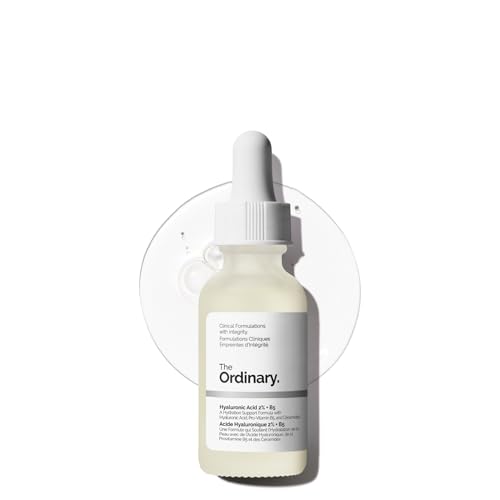
The Ordinary
Hyaluronic Acid 2% + B5
One humectant at a stated concentration, with B5 and ceramides, for under ten dollars.
Best for: Anyone who wants a known ingredient at a known level
Check price on Amazon →Snail mucin became a staple of Korean routines and then a staple everywhere, largely on texture. It gives a distinctive slightly tacky, cushioned finish that people either love or cannot stand, and it layers well under a moisturiser.
What it is, precisely, varies by product, since a filtrate is a mixture rather than a defined active. Studies exist and are mostly small, in vitro or manufacturer adjacent. That is not a reason to avoid it. It is a reason not to expect it to do what a retinoid does.
Snail mucin vs hyaluronic acid at a glance
| snail mucin essence | hyaluronic acid serum | |
|---|---|---|
| What it is | A mixed filtrate | A defined humectant |
| Evidence | Limited, small studies | Established as a humectant |
| Finish | Tacky, cushioned | Light, can feel tight if unsealed |
| Fragrance | None in this one | None |
| Suits acne-prone skin | Generally yes | Yes |
| Price | Low | Lower |
Choose the snail mucin essence if…
You like the feel, your skin is dehydrated, and you want something that layers under a moisturiser and makes the whole routine sit better. Plenty of people with reactive skin find it soothing, and it is fragrance free, which is a bigger factor in that than the snail component. Patch test: mollusc allergy is uncommon but real, and anyone with a shellfish or mollusc allergy should be cautious.
Check the snail mucin essence on Amazon
Choose the hyaluronic acid serum if…
You would rather pay less and know exactly what is in the bottle. A hyaluronic acid serum is one humectant at a stated percentage, and it does the hydration part of what snail mucin does without the ambiguity. Apply to damp skin and seal it with a moisturiser, which is the step that makes either of these work.
Check the hyaluronic acid serum on Amazon
Neither is a treatment
These are hydration and comfort layers. They do not treat acne, they do not fade pigmentation in any meaningful way, and they will not do what a retinoid or a prescription does. If you have persistent acne, melasma, rosacea or anything that is not settling, that is a dermatologist conversation. Patch test any new product on a small area for a few days, particularly if you have a known allergy.
Frequently asked
Does snail mucin actually work? +
For hydration and skin comfort, most users find it does what a good essence does. The evidence for the more ambitious claims about repair and regeneration comes from small studies, several of them in vitro or industry adjacent. Treat it as a nice hydrating layer rather than an active treatment.
Is snail mucin safe if I am allergic to shellfish? +
Snails are molluscs rather than crustaceans, so a shellfish allergy does not automatically mean a reaction, but mollusc allergy exists and cross-reactivity is possible. Patch test carefully, and if you have a significant allergy history, ask your doctor before using it on your face.
Can I use both? +
Yes, and many routines do, since snail mucin already contains hyaluronic acid among other things. Apply the lighter, more watery product first. There is no chemical conflict, and the main risk is simply layering more products than your skin needs.
Is snail mucin cruelty free? +
It depends on the producer and the process, and practices vary. Reputable brands describe collection methods that do not harm the snails, and verification is difficult from the outside. If this matters to you, hyaluronic acid or a glycerin-based hydrator sidesteps the question entirely.
Related guides
Comparison based on published manufacturer specifications and the general consensus of owner reports. We have not tested these products side by side. Confirm current prices, sizes and specifications before buying. As an Amazon Associate we earn from qualifying purchases, at no extra cost to you.
Keep reading
All articles →guides
Hyaluronic Acid vs Glycerin: Which Humectant Actually Hydrates?
Glycerin is the cheaper, better studied humectant and it works in dry air. Hyaluronic acid is bigger, trendier, and needs something sealed over it.
guides
LANEIGE Water Bank Blue Hyaluronic Gel Review: Cooling, Light, Temporary
A researched LANEIGE Water Bank Blue Hyaluronic gel moisturizer review: what a gel moisturiser does for oily skin, the mint question, and when you need a cream instead.
guides
What Is Snail Mucin? Complete Skincare Guide
Snail mucin is the K-beauty ingredient with 5 hydrating actives in one. Here's what it actually is, what it does, and why it works.
Premium Beauty
More Premium Beauty picks
If money isn't the object, these are our Premium Beauty favorites.
CurrentBody
Under $500LED Light Therapy Face Mask Series 3
750 LEDs and 6 wavelengths, chosen in the MyDose app.
Buy on Amazon →Dr. Dennis Gross
Under $500DRx SpectraLite FaceWare Pro
Rigid shell. 100 red + 62 blue LEDs. Sephora's bestseller.
Buy on Amazon →Omnilux
Under $500Men LED Face Mask
Omnilux's in-stock flexible LED face mask (the Contour Face is out of stock on Amazon).
Buy on Amazon →Therabody
Under $500TheraFace PRO
Microcurrent, red light and percussive therapy in one handheld. Replaces three single-purpose gadgets.
Buy on Amazon →Therabody
Under $500TheraFace PRO
Red light + microcurrent + percussive + cleansing. Sci-fi gadget.
Buy on Amazon →Augustinus Bader
Under $500The Cream
TFC8 tech. The one celebrities keep talking about.
Buy on Amazon →