Sunscreen Stick vs Spray: Which Reapplies Properly?
Sticks are easy to under-apply; sprays are worse, and both are commonly used at a fraction of the tested amount. Compare coverage, technique and reapplication reality.
Heads up: this post has affiliate links. We may earn a small commission if you buy something, at no extra cost to you. We only link to stuff we'd actually tell a friend about. Prices shown are approximate and change often; check the retailer for current pricing.
Both are compromises, and the stick is the better one for the face. The SPF on any label is measured at 2 mg per square centimetre, which is far more product than almost anyone applies. Sprays are the most commonly under-applied format there is, and they are affected by wind. A stick is easier to control and easier to see, provided you go over each area several times rather than once.

Neutrogena
Ultra Sheer Face Sunscreen Stick SPF 60
Solid format, no drips, no hands, and easy to keep in a pocket for the reapplication that usually never happens.
Best for: Face, ears, reapplying over makeup
Check price on Amazon →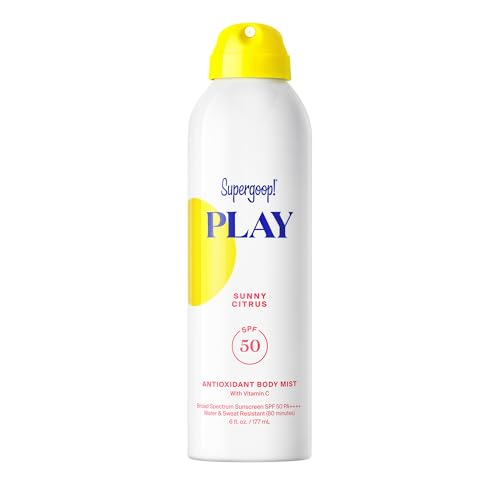
Supergoop!
PLAY Antioxidant Body Mist SPF 50
Fast over large areas and the format most likely to be under-applied. Useful if you treat it as a first step, not the whole job.
Best for: Back, legs and shoulders, always rubbed in
Check price on Amazon →Reapplication is where sun protection actually fails. Most people apply a reasonable amount once in the morning and then nothing for the rest of the day, which is why the format that makes reapplying realistic matters more than the SPF number.
The number itself deserves context. SPF is tested at 2 mg per square centimetre, roughly a quarter teaspoon for the face alone. Applied at half that thickness, protection drops disproportionately. That is the reason a well-applied SPF 30 beats a badly applied SPF 70 every time.
Stick vs spray at a glance
| sunscreen stick | spray sunscreen | |
|---|---|---|
| Easy to under-apply | Yes, without several passes | Yes, notoriously |
| Affected by wind | No | Yes |
| Good for face | Yes | No, inhalation risk |
| Good for large body areas | Slow | Fast |
| Needs rubbing in | Yes | Yes, always |
| Reapplication realism | High | Moderate |
Choose the sunscreen stick if…
You need something you will actually reapply during the day, over makeup, on a face. A stick does not drip, does not need hands, and is small enough to keep with you. The technique that matters: several passes back and forth over each area until the skin has a visible sheen, not one quick swipe. One swipe is nowhere near the tested thickness.
Check the sunscreen stick on Amazon
Choose the spray sunscreen if…
You are covering a back, legs or shoulders quickly. Spray is genuinely faster over large areas, and it is the format most likely to leave gaps. Spray until the skin visibly glistens, then rub it in with your hands, which is the step the format encourages you to skip. Never spray onto the face: spray it into your hands first, because inhaling sunscreen aerosol is a real concern and is why the guidance is explicit about it.
Check the spray sunscreen on Amazon
How much and how often
Roughly a quarter teaspoon for the face and neck, or two fingers’ length of product, and reapply every two hours outdoors and immediately after swimming, sweating or towelling. Sunscreen is one part of sun protection: shade, clothing, a hat and avoiding peak sun hours all do more per unit of effort. Anyone with a history of skin cancer, a changing mole, or a new lesion that bleeds or will not heal should see a dermatologist promptly rather than adjusting their sunscreen.
Frequently asked
Are spray sunscreens as effective as lotions? +
They can be, if applied heavily enough and rubbed in, and in practice they usually are not. Spray is the format most commonly under-applied, wind carries product away, and the visual feedback that tells you when you have applied enough is missing. Treat it as needing a rub-in step every time.
How much sunscreen stick should I use? +
Several passes back and forth over each area until the skin has a visible sheen. A single swipe applies a small fraction of the tested amount. For a face, that means going over the forehead, each cheek, the nose, the chin, the ears and the neck deliberately.
Can I spray sunscreen on my face? +
No. Spray it into your hands and apply it from there. Inhaling sunscreen aerosol is a genuine concern and guidance from health authorities is explicit about not spraying directly at the face, particularly for children.
How often should I reapply? +
Every two hours while outdoors, and immediately after swimming, heavy sweating or towelling off, regardless of the SPF or any water resistance claim. Water resistance is tested for a limited number of minutes and it is not a substitute for reapplying.
Related guides
Comparison based on published manufacturer specifications and the general consensus of owner reports. We have not tested these products side by side. Confirm current prices, sizes and specifications before buying. As an Amazon Associate we earn from qualifying purchases, at no extra cost to you.
Keep reading
All articles →sunscreen
Best Sunscreens for Oily Skin: Matte Picks That Don't Slide
Oily skin needs SPF that doesn't sit on top, slide off, or trigger more shine. Here are 5 picks chosen for actual oil control.
sunscreen
How to Choose Sunscreen: The Complete Buying Guide
Choosing sunscreen: mineral vs chemical, SPF number, reapplication, ingredients to avoid. Here's how to pick the right SPF for your skin and lifestyle.
sunscreen
Best Sunscreens That Don't Leave a White Cast
If you've got deeper skin or just hate looking like a ghost, here are five sunscreens chosen for how little white cast they leave, based on formula and owner reports.
Premium Beauty
More Premium Beauty picks
If money isn't the object, these are our Premium Beauty favorites.
CurrentBody
Under $500LED Light Therapy Face Mask Series 3
750 LEDs and 6 wavelengths, chosen in the MyDose app.
Buy on Amazon →Dr. Dennis Gross
Under $500DRx SpectraLite FaceWare Pro
Rigid shell. 100 red + 62 blue LEDs. Sephora's bestseller.
Buy on Amazon →Omnilux
Under $500Men LED Face Mask
Omnilux's in-stock flexible LED face mask (the Contour Face is out of stock on Amazon).
Buy on Amazon →Therabody
Under $500TheraFace PRO
Microcurrent, red light and percussive therapy in one handheld. Replaces three single-purpose gadgets.
Buy on Amazon →Therabody
Under $500TheraFace PRO
Red light + microcurrent + percussive + cleansing. Sci-fi gadget.
Buy on Amazon →Augustinus Bader
Under $500The Cream
TFC8 tech. The one celebrities keep talking about.
Buy on Amazon →