Post-Inflammatory Hyperpigmentation (PIH): The Complete Treatment Guide
PIH, the dark marks left after acne or irritation, is treatable at home with the right products. Here's the evidence-based guide with timelines.
Heads up: this post has affiliate links. We may earn a small commission if you buy something, at no extra cost to you. We only link to stuff we'd actually tell a friend about. Prices shown are approximate and change often; check the retailer for current pricing.
To prevent and treat post-inflammatory hyperpigmentation (PIH) after acne or irritation, start with daily sunscreen (tinted if possible) and stop picking, then add azelaic acid once the skin is no longer raw or inflamed. Vitamin C and a retinoid such as tretinoin or adapalene can be added next. PIH is a color change, not true scarring, and it usually fades over months, faster with sun protection. If it has not improved after about 3 to 6 months, see a dermatologist.
PIH is one of the most common skin concerns, the dark marks left after acne or irritation clears. Here is how to approach it, in order.
When to start what: step by step
- Day one, any inflammation: use sunscreen every morning and do not pick or scrub. Sun makes existing marks darker.
- Once the area is no longer raw or open: add azelaic acid, which is anti-inflammatory and also targets pigment. Start once a day and build to twice.
- After a few weeks, if skin is calm: add vitamin C in the morning.
- When irritation is controlled: add a retinoid at night to speed turnover. Avoid retinoids in pregnancy.
- At 3 to 6 months with little change: ask a dermatologist about prescription options or in-office treatments.
| Concern | First move | Add later |
|---|---|---|
| New marks after a pimple | Sunscreen, no picking | Azelaic acid |
| Marks from irritation or a rash | Calm the skin, sunscreen | Azelaic acid, vitamin C |
| Old, stubborn marks | Azelaic acid and daily tinted sunscreen | Retinoid, then a dermatologist visit |
| Medium to deep skin tones | Tinted mineral sunscreen with iron oxides | Introduce one active at a time |
PIH vs other pigmentation
PIH is reactive pigmentation, the skin responds to inflammation (acne, eczema, injury, laser) by producing extra melanin. Characteristic: flat, not raised, follows the shape of the original inflammation. Distinguishes from: melasma (hormone-triggered, symmetrical patches), sun spots (UV-caused, isolated spots), and true scarring (texture change, not just color).
PIH characteristics:
- Reactive to inflammation
- Flat (no texture change)
- Follows original shape of the inflammation
- Responds to topical treatment
- Resolves with consistent treatment
The treatment hierarchy
PIH treatment priorities: 1) Tinted mineral SPF daily (prevents new PIH formation and protects existing). 2) Vitamin C morning (tyrosinase inhibition, brightening). 3) Azelaic acid 10% twice daily (anti-inflammation + anti-pigment). 4) Tretinoin nightly (cell turnover acceleration). Together these treat most mild to moderate PIH, though fading takes months, not weeks.
Stacking order:
- SPF (essential, non-negotiable)
- Vitamin C (morning)
- Azelaic acid 10% (twice daily)
- Tretinoin (nightly, post-pregnancy)
The evidence-based product stack
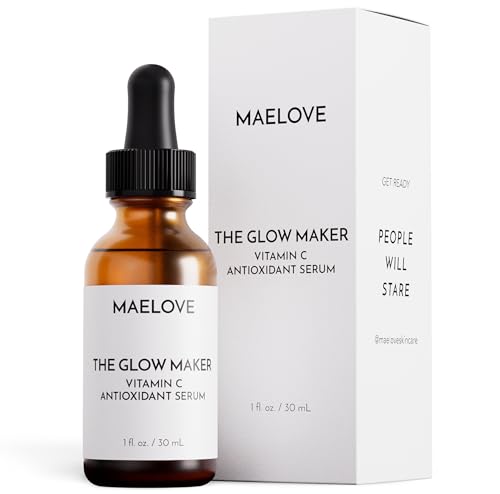
Maelove
Glow Maker Vitamin C Serum
15% L-ascorbic + ferulic. Brightening + PIH.
Best for: Budget PIH treatment
Maelove
Glow Maker Vitamin C Serum
15% vitamin C with ferulic acid and vitamin E. The cult drugstore-price antioxidant serum.
Best for: Serious PIH treatment, mature skin

Naturium
Azelaic Topical Acid 10%
Anti-inflammation + anti-pigment.
Best for: Twice daily PIH treatment
Curology
Custom Tretinoin Formula
Accelerates PIH fading through cell turnover.
Best for: Foundation of PIH treatment

Timeless
20% Vitamin C + E Ferulic Serum
20% L-ascorbic acid with vitamin E and ferulic acid. A no-frills brightening antioxidant serum.
Best for: Budget vitamin C for brightening
Why iron oxides matter for PIH
Tinted mineral SPF with iron oxides is critical for PIH because: visible light (not just UV) triggers pigmentation production. Iron oxides block visible light while protecting skin. For darker skin tones (Fitzpatrick III-VI), visible light is as much a trigger as UV. Untinted sunscreen protects against UV but allows visible light to worsen PIH. Tinted is a good idea for PIH, especially in medium to deep skin tones.
The iron oxides + SPF + PIH math:
- UV blocking: standard SPF handles
- Visible light blocking: iron oxides needed
- Combined: tinted mineral SPF with iron oxides
- PIH outcome: tinted sunscreen may help, since visible light can darken pigment in medium to deep skin tones
PIH in darker skin tones
PIH in Fitzpatrick III-VI (medium-deep skin tones): often takes longer to resolve than in lighter skin, more prone to PIH from even minor inflammation, needs more careful product introduction to avoid irritation that triggers new PIH, especially benefits from tinted mineral SPF with iron oxides. Laser treatments must be used carefully, wrong lasers can worsen PIH in darker skin.
Darker skin considerations:
- Longer resolution time
- More trigger-prone to new PIH
- Careful product introduction (one at a time)
- Iron oxides essential in SPF
- Laser caution: some lasers worsen PIH in darker skin
- Professional referral: experienced derm for darker skin tones
Timeline expectations by severity
PIH fading varies a lot. Light pink or tan marks may improve in a couple of months, brown marks often take several months, and deep brown marks can take 6 months or more. Darker skin tones usually take longer. These are rough estimates, not studies, and without daily SPF the marks can last longer or return.
Timeline by severity:
- Mild PIH: roughly 1-3 months
- Moderate PIH: roughly 3-6 months
- Severe PIH: 6 months or more
- Darker skin: allow extra time
The complete PIH routine
Morning:
- Gentle cleanser
- Vitamin C serum (CEF or Maelove)
- Azelaic acid 10%
- Moisturizer
- Tinted mineral SPF (reapply every 2 hours outdoors)
Evening:
- Gentle cleanser
- Azelaic acid
- Tretinoin (wait 20 min after other products)
- Moisturizer
For darker skin tones:
- Add tinted mineral SPF with iron oxides (non-negotiable)
- Reapply SPF every 2 hours
Professional treatment for stubborn PIH
Stubborn PIH not responding to topicals after 4-6 months: in-office treatments. Chemical peels (TCA 10-20% in-office), Picosure laser for pigmentation, BBL/IPL for surface pigmentation, microneedling (accelerates PIH fading through remodeling). Combined with topicals for maximum effect.
Professional options:
- Chemical peels (in-office, supervised)
- Picosecond laser, chosen carefully for your skin tone
- BBL/IPL for surface pigment in lighter skin
- Microneedling
Combine with topical routine for best outcomes.
Preventing new PIH
PIH prevention: 1) Treat active acne aggressively (tretinoin, BHA, prescription if severe). 2) NEVER pick or squeeze acne (major PIH cause). 3) Use SPF daily (UV triggers new pigmentation). 4) Quickly treat any inflammation (eczema, rashes). 5) Avoid harsh physical exfoliation. Prevention is easier than treatment.
Premium Beauty
PIH treatment Premium Beauty picks
Premium products for stubborn post-acne pigmentation.
CurrentBody
Under $500LED Light Therapy Face Mask Series 3
750 LEDs and 6 wavelengths, chosen in the MyDose app.
Buy on Amazon →Dr. Dennis Gross
Under $500DRx SpectraLite FaceWare Pro
Rigid shell. 100 red + 62 blue LEDs. Sephora's bestseller.
Buy on Amazon →Omnilux
Under $500Men LED Face Mask
Omnilux's in-stock flexible LED face mask (the Contour Face is out of stock on Amazon).
Buy on Amazon →Therabody
Under $500TheraFace PRO
Microcurrent, red light and percussive therapy in one handheld. Replaces three single-purpose gadgets.
Buy on Amazon →Therabody
Under $500TheraFace PRO
Red light + microcurrent + percussive + cleansing. Sci-fi gadget.
Buy on Amazon →Augustinus Bader
Under $500The Cream
TFC8 tech. The one celebrities keep talking about.
Buy on Amazon →Frequently asked
Will PIH ever go away? +
Usually yes. PIH is a color change, not a texture change, so it can fade, though some deep marks linger for a long time. Resolution depends on depth, skin tone and sun exposure.
Does PIH fade on its own? +
Often, but slowly, commonly over many months to a couple of years. Sun protection and treatment can speed it up.
Can I use hydroquinone for PIH? +
Dermatologists sometimes prescribe it for limited courses. Hydroquinone is not for use in pregnancy or breastfeeding without medical advice, and long unsupervised use can backfire. Ask a dermatologist.
Is PIH the same as melasma? +
No. PIH is reactive to inflammation. Melasma is hormone-triggered symmetrical pigmentation. Different causes, overlapping treatments.
Why does my PIH look worse in summer? +
UV exposure triggers more melanin production. Even with SPF, outdoor summer sun can darken existing PIH. Reapply SPF every 2 hours.
Keep reading
All articles →sunscreen
Does Vitamin C Really Fade Dark Spots? (Evidence-Based Answer)
Vitamin C promises dark spot fading, but how well does it actually work? Here's the evidence-based review with realistic timelines.
sunscreen
Best Sunscreens for Melasma: Iron Oxide + High SPF Picks
Melasma needs more than UV protection. You need iron oxide for visible light. Here are the SPFs that actually help fade dark patches.
sunscreen
Chloasma (Mask of Pregnancy): The Complete Treatment Guide
Chloasma or 'mask of pregnancy' affects up to 70% of pregnant women. Here's the evidence-based prevention and treatment, during pregnancy and postpartum.
Premium Beauty
More Premium Beauty picks
If money isn't the object, these are our Premium Beauty favorites.
CurrentBody
Under $500LED Light Therapy Face Mask Series 3
750 LEDs and 6 wavelengths, chosen in the MyDose app.
Buy on Amazon →Dr. Dennis Gross
Under $500DRx SpectraLite FaceWare Pro
Rigid shell. 100 red + 62 blue LEDs. Sephora's bestseller.
Buy on Amazon →Omnilux
Under $500Men LED Face Mask
Omnilux's in-stock flexible LED face mask (the Contour Face is out of stock on Amazon).
Buy on Amazon →Therabody
Under $500TheraFace PRO
Microcurrent, red light and percussive therapy in one handheld. Replaces three single-purpose gadgets.
Buy on Amazon →Therabody
Under $500TheraFace PRO
Red light + microcurrent + percussive + cleansing. Sci-fi gadget.
Buy on Amazon →Augustinus Bader
Under $500The Cream
TFC8 tech. The one celebrities keep talking about.
Buy on Amazon →