Glycolic vs Lactic Acid 2026: Which Exfoliant Is Right for Your Skin?
Glycolic vs lactic acid head-to-head: glycolic wins for anti-aging and texture; lactic wins for sensitive skin, dryness, and gentle hyperpigmentation. Full breakdown + how to choose by skin type.
Heads up: this post has affiliate links. We may earn a small commission if you buy something, at no extra cost to you. We only link to stuff we'd actually tell a friend about. Prices shown are approximate and change often; check the retailer for current pricing.
Glycolic acid wins for anti-aging, texture, and stubborn pigment (its smaller molecule penetrates deeper. Lactic acid wins for sensitive skin, dehydration, and gentle exfoliation) it’s hydrating as well as exfoliating. Choose glycolic if you want maximum results and tolerate some irritation; choose lactic if you have sensitive, dry, or compromised skin.
The two most-used alpha hydroxy acids (AHAs). They sound similar but penetrate to different depths and produce different results.
At a glance
| Product | Feature | Glycolic Acid | Rating | Where |
|---|---|---|---|---|
| Source | - | Sugarcane | Milk / fermented dairy | - |
| Molecule size | - | Smallest AHA (penetrates deepest | Larger) stays in upper layers | - |
| Best for | - | Anti-aging, dullness, deep texture issues | Sensitive skin, dehydration, gentle resurfacing | - |
| Hydrating? | - | No (pure exfoliant | Yes) also acts as humectant | - |
| Irritation level | - | Moderate to high | Low to moderate | - |
| Pregnancy safe? | - | Yes (under 10%) | Yes | - |
| Best concentration | - | 5-10% home use, 30-70% pro peel | 5-10% home use, 30% pro peel | - |
| Cost | - | $10-35 for 30ml toner | $8-30 for 30ml serum | - |
When glycolic acid wins
Choose glycolic acid for: anti-aging (fine lines, photoaging), deeper hyperpigmentation, dullness, KP-style texture on body, or any time you want maximum exfoliation and tolerate the trade-off in irritation. Glycolic is the most-studied AHA with 30+ years of clinical evidence.
Glycolic acid dominates for:
- Anti-aging: penetrates deeply enough to stimulate collagen synthesis. The most-studied topical AHA for fine lines and photoaging.
- Texture / dullness: fastest visible smoothing of rough skin, KP, and dull surface texture.
- Stubborn hyperpigmentation: penetrates deeper than lactic, reaching the pigmented layers more effectively.
- Body skincare, KP (keratosis pilaris) and rough body skin respond better to glycolic than lactic. AmLactin is a famous exception, high-concentration lactic can match.
- Pre-pro skin prep: many in-office peels use 30-70% glycolic for resurfacing.
The catch: glycolic causes more irritation, more photosensitivity, and more “glycolic burn” risk than lactic. If you’re new to AHAs or have sensitive skin, start with lactic before graduating to glycolic.

The Ordinary
Glycolic Acid 7% Toning Solution
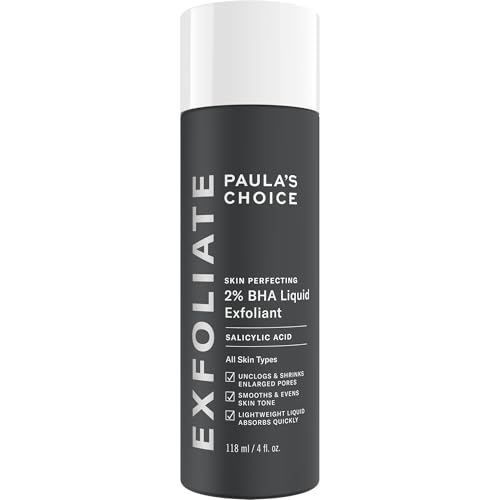
Paula's Choice
2% BHA Liquid Exfoliant
When lactic acid wins
Choose lactic acid for: sensitive skin, dry/dehydrated skin, compromised barriers, first-time AHA users, or as a winter-friendly alternative to glycolic. Lactic exfoliates AND hydrates simultaneously thanks to its humectant properties.
Lactic acid dominates for:
- Sensitive skin: larger molecule means slower, more controlled exfoliation with less irritation risk.
- Dehydration: uniquely among AHAs, lactic acid is also a natural moisturizing factor (NMF) component. It exfoliates without dehydrating, often improving hydration.
- Compromised barriers: gentle enough to use during barrier repair phases when glycolic would be too aggressive.
- First-time AHA users: lower irritation profile makes it the recommended starting acid for AHA newbies.
- Mild hyperpigmentation: works well for surface-level pigment without the irritation risk of glycolic.
- Mature skin: gentler exfoliation suits thinner, more reactive aging skin.
- Winter routines: lactic’s hydrating property is especially valuable in cold, dry months.
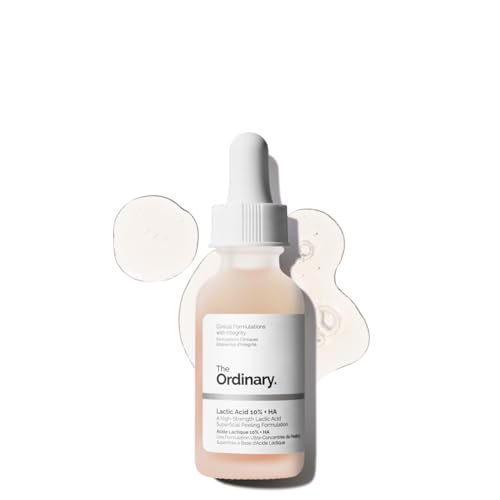
The Ordinary
Lactic Acid 10% + HA
Key differences in plain terms
Molecule size matters. Glycolic’s smaller molecule penetrates deeper into the stratum corneum and reaches living cells. This causes more dramatic changes, but also more irritation. Lactic stays mostly in the upper dead-cell layers and exfoliates more gradually.
Hydration vs pure exfoliation. Lactic acid is part of the skin’s natural moisturizing factor (NMF) system. Topical lactic supplements this, providing hydration alongside exfoliation. Glycolic offers no such hydration benefit, it’s purely an exfoliant.
Irritation tolerance. New users tolerate lactic at 5-10% with minimal issues. Glycolic at 5-10% causes meaningful tingling, redness, or peeling for 30-50% of new users.
Photosensitivity. Both increase UV sensitivity, but glycolic’s deeper penetration causes more pronounced photosensitivity. SPF is mandatory with both, non-negotiable with glycolic.
Can you use them together?
Possible but not recommended for most users. Combining glycolic and lactic doubles the AHA load, dramatically increasing irritation risk. The few products that combine them (like SkinCeuticals C E Ferulic + AHA) use lower individual concentrations to compensate.
Better strategy: alternate nights. Glycolic Mon/Wed/Fri, lactic Tue/Thu/Sat, rest Sunday. Even better: use one AHA + niacinamide (different mechanism, no overlap).
How to choose
| Your situation | Pick |
|---|---|
| First time using AHAs | Lactic 5-10% |
| Sensitive / reactive skin | Lactic |
| Dry or dehydrated skin | Lactic |
| Anti-aging focus, normal-to-oily skin | Glycolic 7-10% |
| Stubborn texture or KP | Glycolic |
| Mature or thinning skin | Lactic 10% |
| Body skincare (KP, rough patches) | Glycolic or AmLactin (lactic 12%) |
| Already use retinol regularly | Lactic (less compounding irritation) |
| Pregnancy | Either, both are safe |
Common mistakes
- Using AHAs daily as a beginner: both glycolic and lactic should start at 2-3 nights/week. Daily use is for advanced users.
- Skipping SPF: AHAs increase UV sensitivity by 30-50% for up to 1 week after stopping. Daily SPF is mandatory.
- Combining with retinol same night: both are exfoliating. Alternate nights instead.
- Stacking with vitamin C in same routine: possible but irritating for most. Use vitamin C AM, AHA PM.
- Buying body lotion-strength acids for face: many “12% AHA” body products are too aggressive for facial skin. Use facial-specific formulations.
Related guides
- KraveBeauty Kale-Lalu-yAHA review
- What Is Glycolic Acid
- What Is Lactic Acid
- Can You Use AHA With Retinol
- Chemical Peel vs AHA Serum at Home
- Niacinamide vs Vitamin C Serum
Frequently asked
Which is stronger, glycolic or lactic acid? +
Glycolic, its smaller molecule penetrates deeper, producing more dramatic exfoliation, more visible anti-aging effects, but also more irritation. Lactic is gentler at the same concentration.
Can sensitive skin use glycolic acid? +
Yes, but cautiously. Start with 5% glycolic 1-2 nights/week, build up over 6-8 weeks. Many sensitive-skinned users prefer to skip glycolic entirely and use lactic at higher concentrations (10-12%) instead.
Can I use lactic acid every day? +
After 6-8 weeks of every-other-day use, most users tolerate daily lactic at 5-10%. Watch for tightness, redness, or sensitivity, these signal the need to scale back.
Does glycolic acid help with dark spots? +
Yes, particularly for surface and mid-depth pigmentation. Combine with vitamin C (AM) and SPF for fastest fading. For deeper melasma, azelaic acid plus glycolic is more effective than glycolic alone.
Is lactic acid a good moisturizer? +
Lactic acid hydrates AS PART of exfoliation but isn't a complete moisturizer on its own. Always follow with a dedicated moisturizer. The hydration benefit means lactic is friendlier to dry skin than glycolic, but you still need a moisturizer step.
Can I use both glycolic and lactic in one routine? +
Possible but doubles irritation risk. Better to alternate: glycolic Mon/Wed/Fri, lactic Tue/Thu/Sat, rest Sunday. Most users get better results from one AHA + niacinamide than from layering two AHAs.
Do AHAs increase sun sensitivity? +
Yes, by 30-50% for up to a week after the last application. SPF 30+ is mandatory daily, year-round, when using any AHA. Skip the AHA the day before high-sun-exposure events (beach day, ski trip).
Are AHAs safe in pregnancy? +
Yes, glycolic and lactic acid at home-use concentrations (under 10%) are considered pregnancy-safe. Avoid in-office peels at 30%+ during pregnancy.
Keep reading
All articles →guides
Mandelic vs Salicylic Acid 2026: Which for Acne?
Mandelic vs salicylic acid head-to-head: salicylic dives into oily pores and beats blackheads; mandelic gently exfoliates and fades dark spots on sensitive skin. Here's how to choose.
guides
What Is Glycolic Acid? The Strongest AHA Explained
Glycolic acid is the smallest AHA molecule, meaning deepest penetration. Here's what it does, who should use it, and the best products.
guides
What Is Lactic Acid? The Gentle AHA for Sensitive Skin
Lactic acid is the gentler AHA alternative to glycolic. Here's how it works, who should use it, and the best products.
Premium Beauty
More Premium Beauty picks
If money isn't the object, these are our Premium Beauty favorites.
CurrentBody
Under $500LED Light Therapy Face Mask Series 3
750 LEDs and 6 wavelengths, chosen in the MyDose app.
Buy on Amazon →Dr. Dennis Gross
Under $500DRx SpectraLite FaceWare Pro
Rigid shell. 100 red + 62 blue LEDs. Sephora's bestseller.
Buy on Amazon →Omnilux
Under $500Men LED Face Mask
Omnilux's in-stock flexible LED face mask (the Contour Face is out of stock on Amazon).
Buy on Amazon →Therabody
Under $500TheraFace PRO
Microcurrent, red light and percussive therapy in one handheld. Replaces three single-purpose gadgets.
Buy on Amazon →Therabody
Under $500TheraFace PRO
Red light + microcurrent + percussive + cleansing. Sci-fi gadget.
Buy on Amazon →Augustinus Bader
Under $500The Cream
TFC8 tech. The one celebrities keep talking about.
Buy on Amazon →