Exosome Injectables: The 2026 Trend Explained
Exosome injectables are the new premium skincare procedure. Here's what they actually are, realistic results, cost, and whether the hype is justified.
Heads up: this post has affiliate links. We may earn a small commission if you buy something, at no extra cost to you. We only link to stuff we'd actually tell a friend about. Prices shown are approximate and change often; check the retailer for current pricing.
Exosome injectables (usually with microneedling or mesotherapy): $800-1,500 per session, 3-session series $2,400-4,500. Exosomes are cell-signaling nanoparticles with growth factors. In-office (with microneedling channels) works meaningfully better than topical-only exosomes. Results: enhanced collagen stimulation, accelerated healing, overall skin quality. ~20-30% better than microneedling alone for appropriate candidates.
Exosomes are the newest premium in-office skincare procedure. Here’s what they actually are and whether the hype is justified.
What exosomes are
Exosomes are nanosized extracellular vesicles (30-150 nanometers) containing proteins, growth factors, and RNA. Cell-signaling packages that communicate between cells. In skincare: lab-derived exosomes from stem cells (human, plant, or salmon) applied after microneedling to deliver growth factors directly into dermis. More uniform than PRP (from your blood).
Key facts:
- Nanosized vesicles (30-150nm)
- Carry growth factors + RNA
- Lab-derived (not from your blood like PRP)
- Applied after microneedling for absorption
- More uniform than PRP
Why they work in-office (but not topically)
Exosomes DON’T work as topical serums at normal skincare concentrations, they’re too large to penetrate intact skin. They DO work when applied after microneedling creates channels for absorption. This is why in-office exosome + microneedling protocols cost $800-1,500 but at-home exosome serums often underwhelm. Applied correctly (with microneedling), exosomes deliver real benefits.
Why delivery matters:
- Topical exosomes: too large for skin barrier penetration
- Post-microneedling: channels allow effective delivery
- In-office correct: amplifies microneedling benefits
- At-home topicals: limited efficacy
Cost breakdown
Exosome injectable costs 2026: single session (microneedling + exosomes) $800-1,500. 3-session series: $2,400-4,500 (typical). Annual maintenance: 1 session $800-1,500. RF microneedling + exosomes: premium at $1,200-2,500/session. Provider experience + exosome brand significantly affects price.
Cost ranges:
- Microneedling + exosomes: $800-1,500/session
- RF microneedling + exosomes: $1,200-2,500/session
- 3-session series: $2,400-7,500
- Annual maintenance: $800-2,500
Exosome vs PRP
Exosome vs PRP vampire facial: exosomes are lab-derived, more uniform concentration. PRP is from your blood, variable quality depending on your health/day. Exosomes slightly more effective on average but more expensive. PRP is “your own” which some patients prefer. Both deliver similar-category benefits (~20-25% over microneedling alone).
Comparison:
- Exosomes: lab-derived, uniform quality, more expensive
- PRP: your own blood, variable quality, slightly cheaper
- Results: comparable for most patients
- Choose by: provider preference + budget
Exosome types
Exosome sources in skincare: Human stem cell exosomes (most studied, most expensive), plant exosomes (gentler, less intensive), salmon DNA exosomes (Korean/PDRN-adjacent), adipose-derived exosomes. Provider typically determines type. Human stem cell exosomes have strongest clinical data. Plant exosomes gentler but may be less effective.
Source types:
- Human stem cell exosomes: strongest data, most expensive
- Plant exosomes: gentler, less intensive
- Salmon DNA exosomes: Korean/PDRN-related
- Adipose (fat) exosomes: emerging option
The exosome pre/post protocol
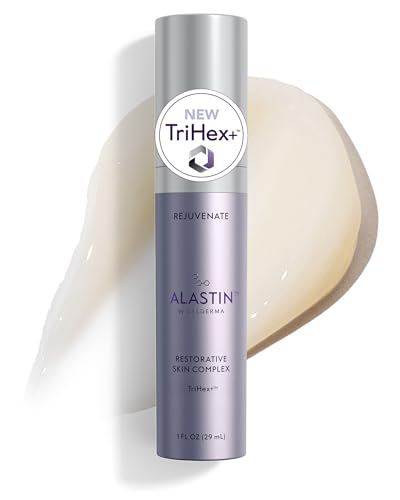
Alastin
Restorative Skin Complex
TriHex peptides for pre/post exosome support.
Best for: 2 weeks before, 4 weeks after exosome treatment

SkinMedica
TNS Advanced+ Serum
Growth factor serum for ongoing support.
Best for: Extending exosome treatment results
Who exosome treatment is worth it for
Exosome treatment worth the cost if: plateaued on standard microneedling, have moderate aging + scarring, willing to invest $2,400-4,500 in series, premium results-oriented. Skip if: never tried basic microneedling (start there), mild concerns, budget under $1,500/session, prefer PRP approach (similar results cheaper).
Worth it for:
- Plateaued on standard microneedling
- Premium results-oriented
- Budget $2,400-4,500 for series
- Moderate-severe concerns
Skip for:
- Never tried basic microneedling
- Mild concerns
- Budget-constrained
- PRP satisfying you
At-home “exosome” products reality check
At-home exosome serums ($200-500+) are mostly marketing, exosomes don’t penetrate intact skin effectively at topical concentrations. If you’re spending hundreds on at-home exosome serums, you’re better off with growth factor serums (SkinMedica TNS Advanced+) which work topically. Save exosomes for in-office use where they genuinely deliver.
At-home exosome truth:
- Topical exosomes: limited penetration
- “Exosome serums”: usually mostly peptides + marketing
- Growth factor serums work topically (TNS Advanced+)
- Save exosome spend for in-office procedure
Premium Beauty
Exosome procedure support stack
Products that amplify in-office exosome results.
CurrentBody
Under $500LED Light Therapy Face Mask Series 3
750 LEDs and 6 wavelengths, chosen in the MyDose app.
Buy on Amazon →Dr. Dennis Gross
Under $500DRx SpectraLite FaceWare Pro
Rigid shell. 100 red + 62 blue LEDs. Sephora's bestseller.
Buy on Amazon →Omnilux
Under $500Men LED Face Mask
Omnilux's in-stock flexible LED face mask (the Contour Face is out of stock on Amazon).
Buy on Amazon →Therabody
Under $500TheraFace PRO
Microcurrent, red light and percussive therapy in one handheld. Replaces three single-purpose gadgets.
Buy on Amazon →Therabody
Under $500TheraFace PRO
Red light + microcurrent + percussive + cleansing. Sci-fi gadget.
Buy on Amazon →Augustinus Bader
Under $500The Cream
TFC8 tech. The one celebrities keep talking about.
Buy on Amazon →Frequently asked
Are at-home exosome serums worth it? +
Mostly no, topical exosome absorption is limited. Save money for in-office procedures where exosomes genuinely penetrate and deliver.
Exosomes vs PRP, which is better? +
Comparable results for most patients. Exosomes more uniform; PRP uses your own blood. Similar effectiveness, similar category.
Are exosomes FDA-approved for skincare? +
Not formally for cosmetic use. Used off-label by many dermatologists. Regulatory framework evolving. Work with experienced providers using reputable exosome sources.
How long do exosome results last? +
12-18 months from series. Annual maintenance session typical. Complemented by topical growth factor serums extends duration.
Who should avoid exosomes? +
Pregnancy (unstudied), active infection, immunocompromised (consult with provider). Most healthy adults are candidates.
Keep reading
All articles →tretinoin
Exosomes vs Peptides in Skincare: What Actually Works in 2026
Exosomes are the hot new anti-aging ingredient. But do they beat peptides? Here's the honest breakdown of exosomes vs peptides, mechanism, evidence.
guides
Slugging Skincare: Complete Guide (2026)
Slugging, the Korean skincare trend of sealing your face with Vaseline, does it actually work? Here's the science, the best products, and who should.
guides
Emface Cost 2026: $2,500–$4,500 for a Full Series (Real Prices)
Real Emface prices for 2026: $800-$1,200 per session, with the standard 4-session series running $2,500-$4,500 at most clinics. What affects price, plus at-home muscle-toning alternatives.
Premium Beauty
More Premium Beauty picks
If money isn't the object, these are our Premium Beauty favorites.
CurrentBody
Under $500LED Light Therapy Face Mask Series 3
750 LEDs and 6 wavelengths, chosen in the MyDose app.
Buy on Amazon →Dr. Dennis Gross
Under $500DRx SpectraLite FaceWare Pro
Rigid shell. 100 red + 62 blue LEDs. Sephora's bestseller.
Buy on Amazon →Omnilux
Under $500Men LED Face Mask
Omnilux's in-stock flexible LED face mask (the Contour Face is out of stock on Amazon).
Buy on Amazon →Therabody
Under $500TheraFace PRO
Microcurrent, red light and percussive therapy in one handheld. Replaces three single-purpose gadgets.
Buy on Amazon →Therabody
Under $500TheraFace PRO
Red light + microcurrent + percussive + cleansing. Sci-fi gadget.
Buy on Amazon →Augustinus Bader
Under $500The Cream
TFC8 tech. The one celebrities keep talking about.
Buy on Amazon →