Red Light Wavelengths Explained: 630nm vs 660nm vs 850nm
The numbers on the box actually matter. Here's what each wavelength does, which ones you need, and the marketing speak to ignore.
Heads up: this post has affiliate links. We may earn a small commission if you buy something, at no extra cost to you. We only link to stuff we'd actually tell a friend about. Prices shown are approximate and change often; check the retailer for current pricing.
630-660nm (red) penetrates 5mm and treats epidermis/upper dermis (fine lines, tone, surface pigmentation. 810-850nm (near-infrared) penetrates 10mm+ and treats deeper tissue) collagen density, firmness, scars. The best devices combine both.
Every red light device lists wavelengths. Most buyers have no idea what they mean. Here’s the actual science.
The depth-per-wavelength chart
Shorter wavelengths (blue, UV) penetrate barely 1mm. Visible red (630-660nm) reaches 5mm. Near-infrared (810-850nm) reaches 10mm+. Choose wavelengths based on what tissue depth you want to target.
| Product | Depth | Main effect | Rating | Where |
|---|---|---|---|---|
| Visible 415 nm (Blue) | <1mm | Kills C. acnes bacteria, treats active acne | Acne only | - |
| Visible 630-660 nm (Red) | ~5mm | Boosts ATP, reduces inflammation, fine lines | Anti-aging | - |
| Invisible 810-850 nm (NIR) | ~10mm | Deep collagen synthesis, firmness, scars | Deep aging | - |
| Invisible 1064 nm | ~30mm | Muscle recovery, joint pain, systemic | Body, not skin | - |
630nm vs 660nm: is there a real difference?
Both 630nm and 660nm are absorbed by the same mitochondrial enzyme (cytochrome c oxidase) with nearly identical efficiency. 660nm penetrates slightly deeper. For skin, either works, the marketing war between them is mostly noise.
In peer-reviewed literature:
- 633nm: used in Omnilux clinical trials
- 660nm: more common in panels; used in wound-healing research
- Difference in outcomes: minimal when dose is matched
If a device offers 633nm or 660nm and you’re choosing, don’t agonize. Pick on irradiance, FDA clearance, and form factor instead.
Near-infrared is the one people skip: and shouldn’t
Near-infrared wavelengths (810-850nm) penetrate into the deeper dermis where collagen remodeling actually happens. Devices without NIR only treat the surface, missing the structural changes that produce long-term firmness.
If you can only pick one wavelength range for anti-aging, pick NIR. Surface benefits (tone, texture) are nice, but the thing that keeps skin looking young is dermal collagen density, and that lives at 10mm down.
Watch out for devices that only offer red (like the Dr. Dennis Gross FaceWare Pro, which uses 605nm red + blue). They work for some things, but they don’t hit deep tissue.
What wavelengths to avoid hype about
Avoid devices marketing “400-1000nm full spectrum”, this is usually a single cheap LED emitting broadband light at low intensity. Specific narrow-wavelength LEDs (±10nm) deliver way more therapeutic dose per watt.
Marketing red flags:
- “Full spectrum” or “400-1000nm range”
- “7 colors of light therapy”
- “Includes green, yellow, and purple”
- Green, yellow, purple LEDs don’t have published skin benefits at consumer doses
Stick with: 630-660nm + 810-850nm. Period.
Devices with the right wavelength combos
Dr. Dennis Gross
DRx SpectraLite FaceWare Pro
FDA-cleared red + blue LED mask. 100 red and 62 blue lights for firmer, clearer skin.
Best for: Evidence-based anti-aging
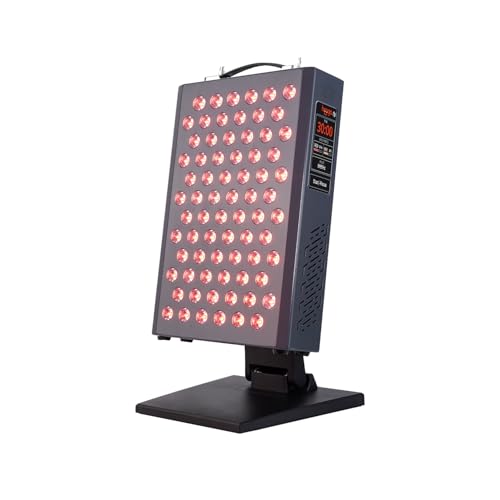
Hooga
HG300 Red Light Panel
660nm + 850nm. Clean dual-wavelength panel.
Best for: Budget full-body treatment
Frequently asked
Is 660nm better than 630nm? +
Slightly deeper penetration, but the difference is small. Both are well-studied for skin. Pick based on the full device, not this spec alone.
Do I need near-infrared for face? +
For anti-aging, yes, NIR reaches the dermis where collagen lives. Red-only is fine for tone/texture but limited for firmness.
What do the multi-color "LED therapy" devices actually do? +
Red (630nm) and NIR (850nm) are evidence-based. Blue (415nm) helps acne. Green, yellow, purple are marketing, they don’t have meaningful published skin benefits.
Related: The mask that covers all four of these wavelengths in one device is our Editor’s Pick, see the MitoGLOW vs Omnilux breakdown and the full LED mask shootout.
Keep reading
All articles →red-light-therapy
Is the CurrentBody Series 3 LED Mask Worth It? What the Listing Says
CurrentBody Series 3 is a cordless LED mask with 750 LEDs, 6 wavelengths, and MyDose app control. Here is who it suits and what to weigh before buying.
red-light-therapy
Best Red Light Therapy Devices for Face: 2026 Buyer's Guide
We compared 12 red light masks and panels against wavelength, FDA clearance, and cost per session. Here's what to buy at every budget.
red-light-therapy
Best LED Masks for Acne (2026): Blue + Red Light Picks
The best LED masks for active acne in 2026, blue light (415nm) kills breakout bacteria, red light calms inflammation. Which masks actually have blue mode.
Premium Beauty
More Premium Beauty picks
If money isn't the object, these are our Premium Beauty favorites.
CurrentBody
Under $500LED Light Therapy Face Mask Series 3
750 LEDs and 6 wavelengths, chosen in the MyDose app.
Buy on Amazon →Dr. Dennis Gross
Under $500DRx SpectraLite FaceWare Pro
Rigid shell. 100 red + 62 blue LEDs. Sephora's bestseller.
Buy on Amazon →Omnilux
Under $500Men LED Face Mask
Omnilux's in-stock flexible LED face mask (the Contour Face is out of stock on Amazon).
Buy on Amazon →Therabody
Under $500TheraFace PRO
Microcurrent, red light and percussive therapy in one handheld. Replaces three single-purpose gadgets.
Buy on Amazon →Therabody
Under $500TheraFace PRO
Red light + microcurrent + percussive + cleansing. Sci-fi gadget.
Buy on Amazon →Augustinus Bader
Under $500The Cream
TFC8 tech. The one celebrities keep talking about.
Buy on Amazon →